Next Ariane 6 launch on 12 February 2026: Why you definitely should not miss it
23.01.2026
Why you definitely should not miss the next Ariane 6 launch
Every Ariane 6 launch is a unique experience. But the next flight – VA267 – will be even more special. Arianespace is launching 32 satellites into low Earth orbit for Amazon Leo. And this mission will include several premieres for Ariane 6:
– First flight of Ariane 64:
Flight VA267 will mark the first flight of the four-booster version of Ariane 6, carrying the heaviest payload ever placed into orbit by the new European launcher. On this mission, Ariane 6 will deliver around 20 tons into space – about twice the payload capacity of the two-booster Ariane 62 configuration. Later this year, Ariane 6’s payload capacity will increase even further with the introduction of the new P160C booster engines.
– Launch Vehicle Adapter in “heavy-lift” version:
To support the increased payload, the Launch Vehicle Adapter has also been reinforced. The LVA connects the launcher to the upper composite and the two half-fairings are secured to it. Made of composite material, the “heavy-lift” version features structural reinforcements with additional composite layers at the most heavily loaded points.
– First use of the long payload fairing:
For the first time, Ariane 6 will fly with the 20-metre-long fairing, which protects the dispenser carrying 32 satellites during ascent and throughout the early phase of flight. With this fairing, the Ariane 64 for flight VA267 will stand 62 metres tall. By comparison, the total height of Ariane 62 on previous missions with the 14-metre-long fairing was 56 metres.
– First flight of a satellite constellation:
The sequential deployment of more than 30 satellites into their orbits also brings several firsts in the flight programme. The teams in Les Mureaux must take into account the impact and impulses generated during each satellite’s separation from the mast, as well as the resulting changes in weight and gravity throughout the mission. As the satellites are released into orbit, the Auxiliary Propulsion Unit (APU) plays a critical role, providing continuously low thrust to maintain the upper stage’s trajectory and attitude and ensure the satellites do not collide immediately after separation. The Vinci engine will ignite following upper-stage separation to reach low Earth orbit and will be fired again at the end of the mission for de-orbiting.
– A launch campaign pushing the ramp-up even further:
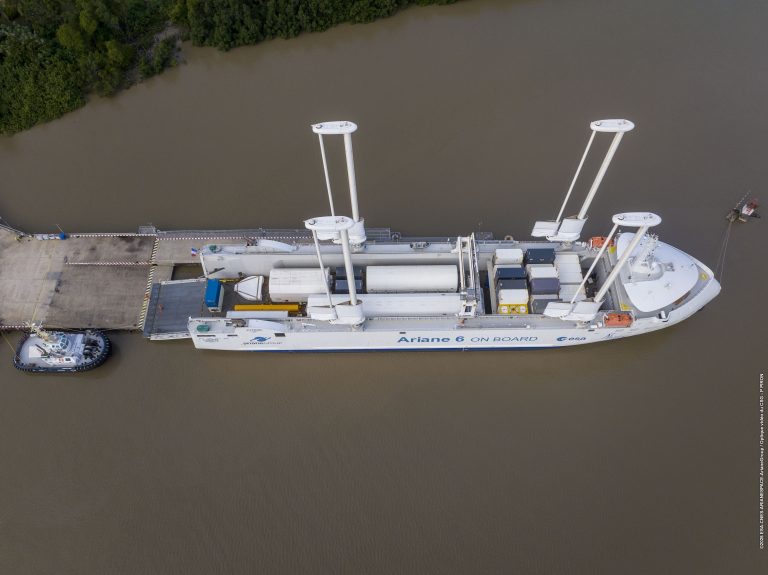
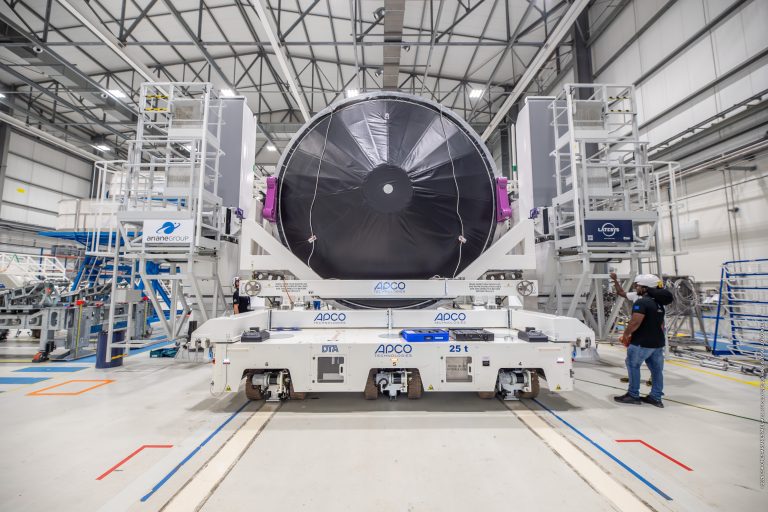
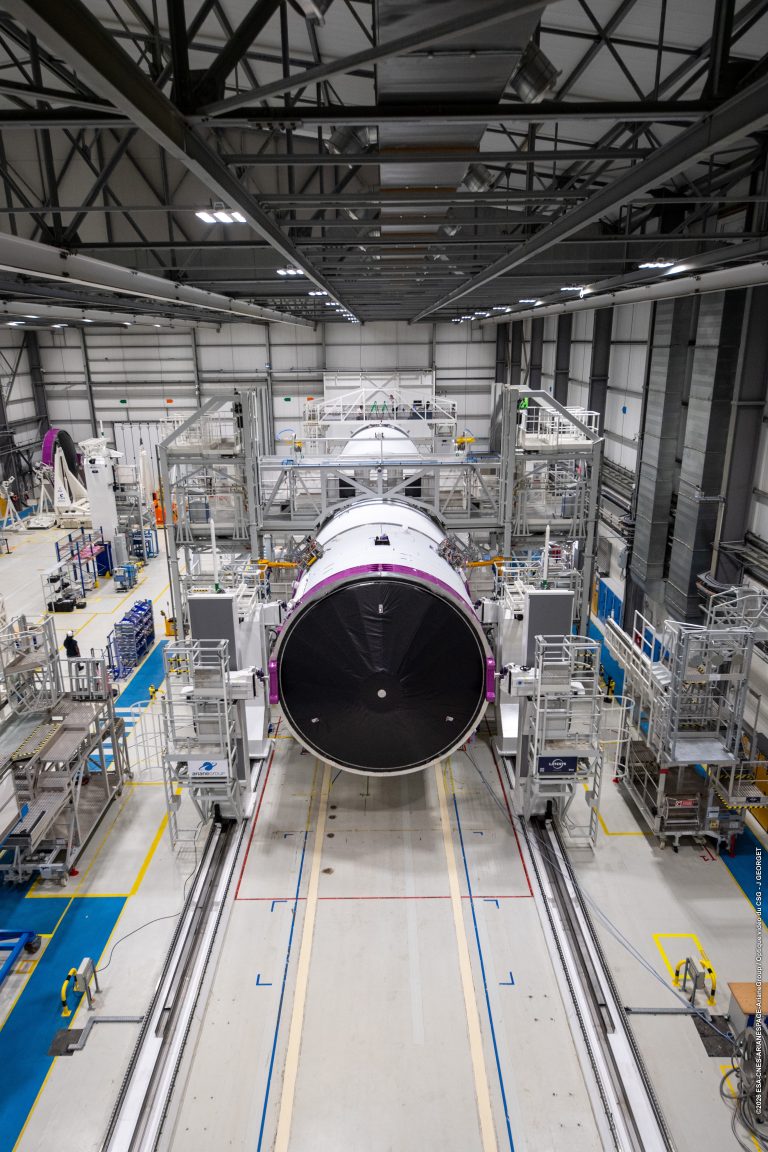
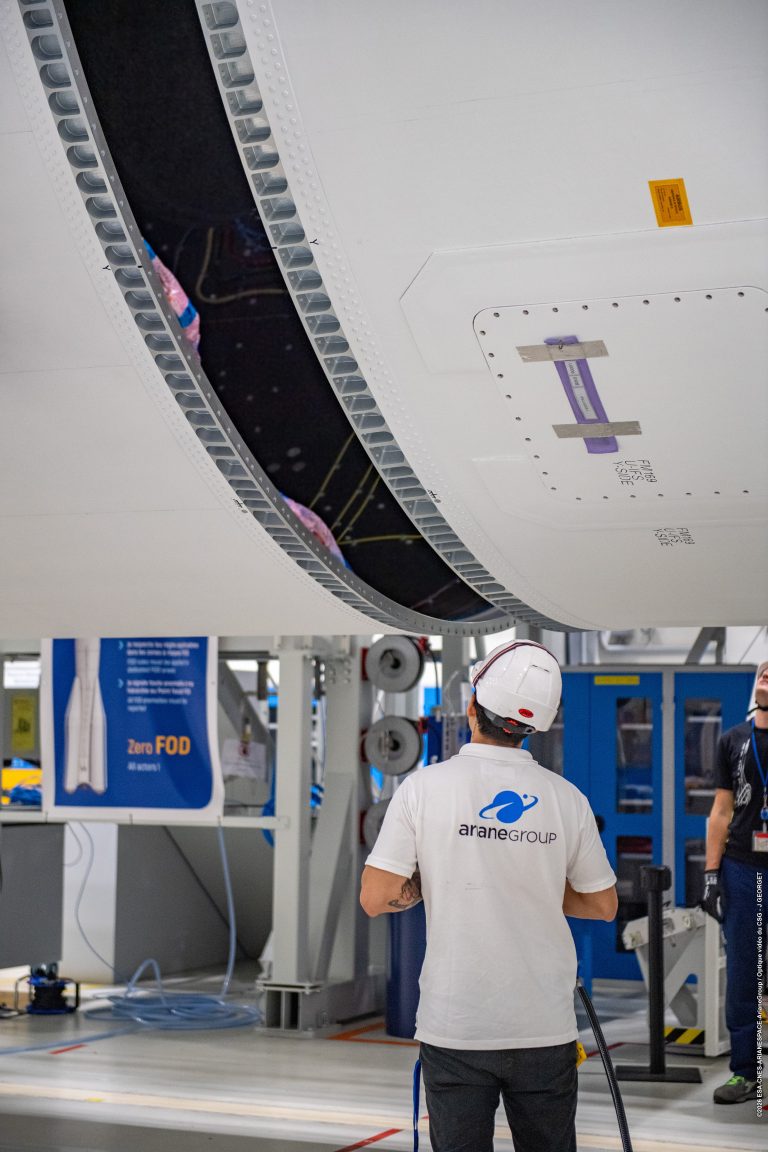
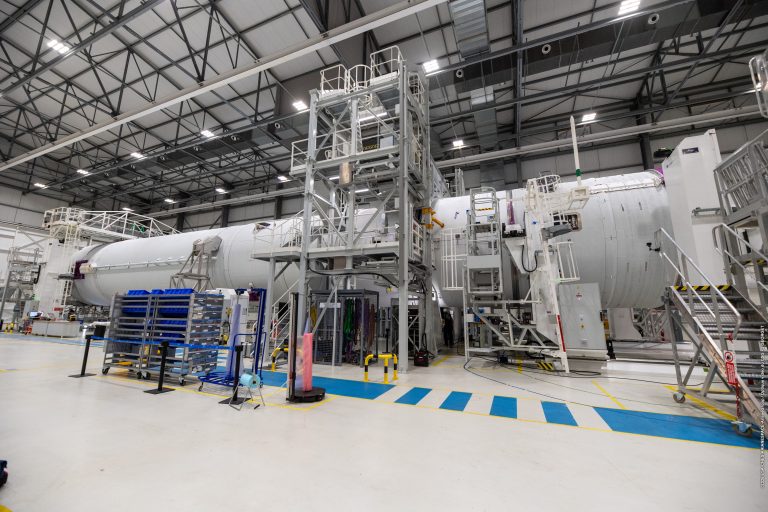
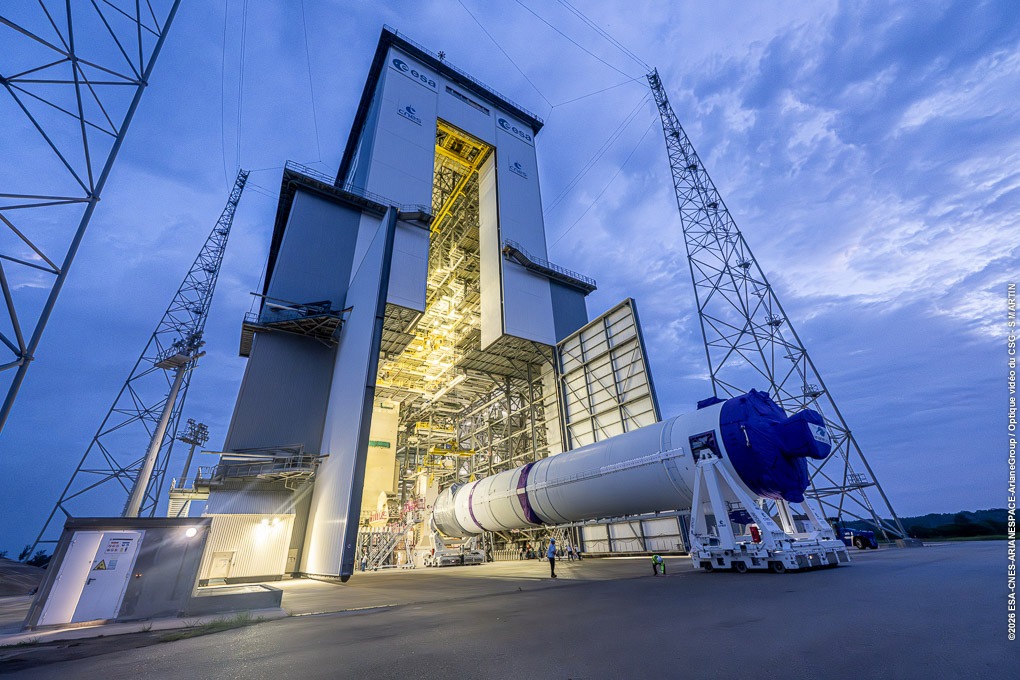
Following the arrival of the stages in Kourou, the launch campaign is now in full swing. The teams are currently integrating the Central Core and preparing the Boosters, while the satellites are being installed in the Upper Composite in parallel.
The campaign will feature several additional premieres – so stay tuned!